Layered Sweet Potato Butternut Squash Carrot Lasagna

If you think lasagna has to involve pasta sheets and heavy tomato sauce, this recipe is about to completely change your perspective. This layered sweet potato, butternut squash, and carrot lasagna is not your traditional Italian bake — it’s something warmer, sweeter, and surprisingly elegant. Imagine tender roasted vegetables stacked beautifully, creamy crumbles of feta melting between layers, crunchy toasted walnuts adding depth, and everything finished with a glossy cranberry honey balsamic glaze that ties it all together.
This dish feels like autumn wrapped in layers. It’s colorful, comforting, and just sophisticated enough to serve at a holiday gathering — yet simple enough for a cozy weeknight dinner. The natural sweetness of the vegetables plays perfectly against the salty feta and tangy glaze. Every bite offers contrast: soft and creamy, slightly crisp, sweet and savory.
And here’s the real magic — there’s no pasta involved. The thinly sliced sweet potatoes act as the “noodles,” giving the structure you expect from lasagna but with a nutrient-dense twist. It’s naturally gluten-free, packed with vitamins, and still deeply satisfying.
Whether you’re vegetarian, cooking for guests, or simply craving something wholesome but indulgent, this vegetable lasagna delivers big flavor without feeling heavy. It’s the kind of dish that makes people pause after the first bite and say, “Wait… what is in this?”
Let’s break down exactly why it works so beautifully.
Why This Vegetable Lasagna Is Different
Traditional lasagna leans heavily on pasta, rich sauces, and loads of cheese. Delicious? Absolutely. But sometimes you want something lighter, fresher, and more vegetable-forward — without sacrificing comfort. That’s where this recipe stands out.
First, it replaces pasta with thin slices of sweet potato. That alone changes everything. Sweet potatoes bring natural creaminess once roasted, and they hold their shape beautifully when layered. Instead of a carb-heavy base, you get fiber-rich, vitamin-packed layers that still provide that satisfying structure.
Second, the flavor profile moves away from tomato and oregano and into sweet-savory territory. Butternut squash adds velvety texture and gentle sweetness. Carrots bring subtle earthiness. Feta injects sharp, salty contrast. Walnuts introduce crunch and depth. Then the cranberry honey balsamic glaze sweeps in with sweet-tart brightness that lifts the entire dish.
It’s layered like lasagna, baked like lasagna, sliced like lasagna — but tastes entirely new.
The textures are what truly make it shine:
- Creamy roasted vegetables
- Slight bite from carrots
- Crumbly melted feta
- Crunchy walnuts
- Sticky, glossy glaze
Every forkful feels intentional and balanced. Nothing is overwhelming. Nothing is bland.
This isn’t just a vegetable substitute for lasagna. It’s its own signature dish.
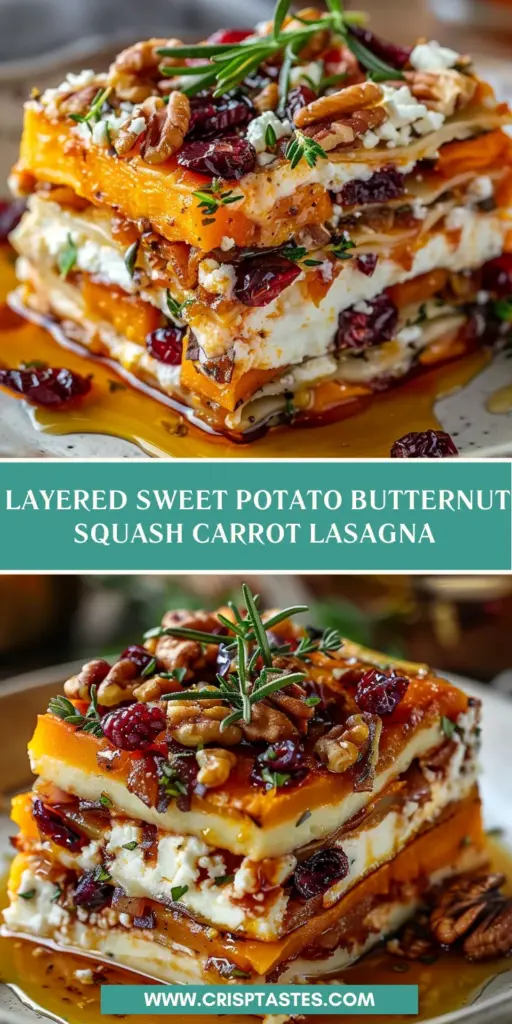
Ingredient Breakdown: Simple, Seasonal, Powerful
One of the most beautiful things about this recipe is its simplicity. There’s no complicated sauce, no long ingredient list, no hard-to-find components. Everything here serves a purpose.
Let’s look at the main players:
Vegetables
- Sweet potatoes
- Butternut squash
- Carrots
These three root vegetables share natural sweetness but differ in texture. Together, they create depth rather than monotony.
Flavor Builders
- Olive oil
- Salt and black pepper
Simple seasoning allows the vegetables to shine without masking their natural flavors.
Texture & Contrast
- Crumbled feta cheese
- Toasted walnuts
This is where richness and crunch enter the picture.
The Glaze
- 100% cranberry juice
- Honey
- Balsamic vinegar
This trio transforms into a sticky, concentrated glaze that balances the sweetness of the vegetables with acidity and brightness.
Each ingredient is accessible, but when layered together, they create something that tastes far more complex than the list suggests.
The key is balance. Sweet vegetables need salt. Creamy textures need crunch. Rich layers need acidity. This recipe checks every box without overcomplicating things.
Sweet Potatoes: The Creamy Foundation
Sweet potatoes are more than just a healthy swap here — they’re the backbone of the entire dish. When sliced thin and roasted lightly before baking, they soften into tender, almost buttery layers. They mimic pasta sheets surprisingly well, but instead of being neutral, they contribute flavor.
Their natural sweetness becomes deeper and slightly caramelized in the oven. That caramelization enhances complexity, adding subtle nutty notes. Structurally, sweet potatoes hold up beautifully when baked in layers. They don’t collapse or turn watery if sliced evenly.
Nutritionally, they’re loaded with:
- Vitamin A
- Fiber
- Potassium
- Antioxidants
But beyond health benefits, they bring emotional comfort. Sweet potatoes have that cozy, fall-like warmth. They feel grounding and hearty.
When placed as the bottom and top layers, they frame the dish. The top layer slightly crisps at the edges during the final uncovered bake, creating golden corners that are incredibly satisfying to cut into.
Think of sweet potatoes as the sturdy, creamy canvas upon which the rest of the flavors paint themselves.
Butternut Squash: Velvety Sweetness in Every Bite
Butternut squash might be one of the most luxurious vegetables when roasted properly. Its texture becomes soft, silky, and almost melt-in-your-mouth. In this lasagna, it acts as the creamy middle layer that blends everything together.
Roasting the squash first is crucial. It removes excess moisture and intensifies flavor. Raw squash would release too much water during baking, making the dish soggy. Pre-roasting concentrates its sugars and improves texture.
Flavor-wise, butternut squash pairs beautifully with feta. The salty tang of the cheese cuts through the sweetness, preventing the dish from becoming overly sugary. Add walnuts to that combination, and suddenly you have creamy, salty, crunchy harmony in a single bite.
Visually, squash adds warm golden color between the vibrant orange sweet potatoes and bright carrots. The layers become almost mosaic-like once sliced.
If sweet potatoes are the structure, butternut squash is the softness — the element that makes each bite feel smooth and luxurious rather than firm and dense.
Carrots: Bright Color and Subtle Structure
Carrots may seem like the quiet ingredient in this layered vegetable lasagna, but don’t underestimate them. They bring more than just color — they add structure, gentle sweetness, and a slightly firmer bite that balances the softer sweet potatoes and butternut squash.
When thinly sliced and lightly roasted, carrots become tender without losing their shape. That’s important. If every layer were equally soft, the final dish might feel mushy. Carrots create contrast. They give your fork something to sink into. That slight resistance makes each bite more satisfying.
Flavor-wise, carrots contribute a natural earthiness. Their sweetness is different from sweet potatoes — lighter and fresher. When baked with olive oil, salt, and pepper, their sugars caramelize slightly at the edges, deepening the overall flavor profile.
They also brighten the presentation. Once sliced, the lasagna reveals stripes of orange and gold that make it visually stunning. This isn’t a dull casserole — it’s vibrant and inviting.
Carrots also absorb the cranberry honey balsamic glaze beautifully. The glaze seeps gently into their layers, enhancing their sweetness while adding tangy depth.
In short, carrots are the balance point. They keep the dish from becoming too soft, too sweet, or too heavy. They quietly hold everything together.
The Magic of Feta and Walnuts
Here’s where this recipe shifts from simple roasted vegetables to something memorable.
Feta cheese is sharp, salty, and slightly creamy when baked. As the lasagna cooks, it softens without completely melting away. Instead of forming a stretchy layer like mozzarella, feta maintains little pockets of tangy richness throughout the dish.
Why is that important? Because sweet vegetables need contrast. Without something salty, the flavors could blur into one note. Feta cuts through sweetness and keeps each bite balanced.
Now add toasted walnuts.
Walnuts bring crunch, depth, and a subtle bitterness that rounds out the sweetness of the vegetables and honey glaze. Toasting them beforehand enhances their nutty aroma and prevents them from tasting raw.
Together, feta and walnuts create:
- Creamy + crunchy contrast
- Sweet + salty balance
- Soft layers + textured bite
Every forkful becomes multidimensional. You’re not just tasting vegetables — you’re experiencing layers of flavor and texture interacting.
This combination makes the dish feel elevated. It moves from “healthy vegetable bake” to something you could confidently serve at a dinner party.
Cranberry Honey Balsamic Glaze: The Game-Changer
The glaze is what transforms this layered bake into something extraordinary.
Cranberry juice provides tartness and vibrant color. Honey adds smooth sweetness. Balsamic vinegar introduces acidity and complexity. When simmered together, these ingredients reduce into a glossy, slightly thick syrup that coats the vegetables beautifully.
Why reduce it? Because reduction intensifies flavor. As the liquid simmers, water evaporates, concentrating sweetness and acidity. The result is bold but balanced.
The glaze does three key things:
- Adds moisture without making the dish soggy.
- Creates a shiny, appetizing finish.
- Balances the sweetness of the root vegetables with bright tang.
Drizzling two-thirds before baking allows the flavor to infuse into the layers. Adding the remaining glaze during the final uncovered bake creates a slightly caramelized top.
When you slice into the lasagna, you’ll notice subtle streaks of deep red glaze running through the layers. It’s visually beautiful and flavor-packed.
Without the glaze, this would still be good. With it, the dish becomes unforgettable.
Step-by-Step Cooking Guide
Making this layered vegetable lasagna is straightforward, but technique matters.
1. Preheat and Prepare
Set your oven to 375°F (190°C) and lightly grease a baking dish.
2. Roast the Vegetables
Toss sweet potatoes, squash, and carrots with olive oil, salt, and pepper. Roast for 15–20 minutes until just tender — not fully soft. This step removes excess moisture and enhances flavor.
3. Layer Thoughtfully
Start with sweet potatoes at the base. Add feta and walnuts. Layer squash, then carrots, repeating until full. Finish with sweet potatoes on top.
Press layers gently to compact them without smashing.
4. Prepare the Glaze
Simmer cranberry juice, honey, and balsamic vinegar for 5–7 minutes until slightly thickened.
5. Bake Covered
Drizzle two-thirds of the glaze. Cover with foil and bake 30 minutes.
6. Final Bake
Remove foil, drizzle remaining glaze, and bake uncovered for 10–15 minutes until golden and bubbling.
7. Rest
Let it rest 10 minutes before slicing. This helps layers set for clean cuts.
Each step builds flavor and structure.
Tips for Perfect Layering
Layering is more than stacking vegetables randomly.
- Slice vegetables evenly for consistent cooking.
- Avoid overloading each layer with cheese or nuts.
- Press gently between layers to reduce air gaps.
If vegetables are too thick, the dish may not slice cleanly. Aim for thin, uniform slices.
Resting after baking is crucial. Cutting too soon causes layers to slide apart.
Think of it like building a house — structure first, then finishing touches.
Flavor Profile and Texture Experience
This dish hits multiple flavor notes at once:
- Sweet (sweet potatoes, squash, honey)
- Salty (feta)
- Tangy (cranberry and balsamic)
- Nutty (walnuts)
Texturally, it offers:
- Tender roasted vegetables
- Slight bite from carrots
- Creamy cheese pockets
- Crunchy walnut pieces
- Sticky glaze finish
It feels indulgent but fresh. Rich but not heavy. Balanced and satisfying.
Every bite evolves — first sweetness, then salt, then tang.
Nutritional Benefits of This Vegetable Lasagna
This recipe is naturally:
- Gluten-free
- Vegetarian
- High in fiber
- Rich in vitamins A and C
Sweet potatoes and squash provide antioxidants. Walnuts offer healthy fats. Feta adds protein and calcium.
It’s comforting food that still feels nourishing.
Common Mistakes to Avoid
- Skipping pre-roasting (leads to soggy layers)
- Not reducing glaze enough (thin and watery)
- Overcrowding layers with cheese
- Cutting without resting
Attention to these details ensures perfect results.
Variations and Customizations
Want to experiment?
- Make it vegan: use plant-based feta and maple syrup instead of honey.
- Add protein: layer cooked lentils or chickpeas.
- Spice it up: add chili flakes or fresh thyme.
- Swap nuts: try pecans instead of walnuts.
This recipe adapts easily while keeping its structure.
Make-Ahead and Storage Tips
You can assemble the lasagna a day ahead and refrigerate before baking.
Leftovers keep in the fridge for up to 3 days. Reheat in the oven at 325°F until warmed through.
It also freezes well after baking. Wrap tightly and thaw overnight before reheating.
Serving Suggestions
Serve with:
- A crisp green salad
- Roasted Brussels sprouts
- Warm crusty bread
- Light white wine or sparkling water
It’s perfect for holiday tables, fall dinners, or elegant vegetarian mains.
Why This Dish Is Perfect for Fall and Winter
Root vegetables are at their best during colder months. Their natural sweetness and warmth match cozy evenings and holiday gatherings.
This lasagna feels festive without being heavy. Colorful without being complicated. Comforting without being overwhelming.
It’s the kind of dish that makes a table feel abundant and welcoming.
Conclusion
Layered Sweet Potato Butternut Squash Carrot Lasagna is more than just a vegetable bake. It’s a thoughtful combination of sweet, savory, tangy, creamy, and crunchy elements layered into one beautiful dish.
It’s wholesome yet indulgent. Simple yet elegant. Comforting yet vibrant.
Once you try it, you’ll see — this isn’t a substitute for traditional lasagna. It’s something entirely its own.
FAQs
1. Can I prepare this without feta?
Yes, you can substitute goat cheese or a dairy-free alternative.
2. Can I skip the walnuts?
Absolutely. Sunflower seeds or pecans work well too.
3. Is fresh cranberry juice required?
Use 100% pure cranberry juice, not sweetened cocktail.
4. How thin should the vegetables be sliced?
About ⅛ to ¼ inch for even cooking.
5. Can I make it ahead for holidays?
Yes. Assemble the day before and bake before serving for best results.
Layered Sweet Potato Butternut Squash Carrot Lasagna
Ingredients
-
2 medium sweet potatoes, thinly sliced
-
2 cups diced butternut squash
-
2 medium carrots, thinly sliced
-
2 tbsp olive oil (divided)
-
Salt and black pepper, to taste
-
1 cup crumbled feta cheese
-
½ cup chopped toasted walnuts
-
½ cup 100% pure cranberry juice
-
2 tbsp honey
-
1 tbsp balsamic vinegar
Instructions
1️⃣ Preheat & Prepare
Preheat your oven to 375°F (190°C).
Lightly grease a medium baking dish with a little olive oil.
2️⃣ Roast the Vegetables
In a large bowl, toss the sliced sweet potatoes, diced butternut squash, and carrots with 1 tablespoon olive oil, salt, and black pepper.
Spread them on a baking sheet in a single layer.
Roast for 15–20 minutes, until just tender but not fully soft.
Remove from oven and set aside.
3️⃣ Start Layering
In your prepared baking dish:
-
Add a layer of sweet potatoes on the bottom.
-
Sprinkle some crumbled feta and toasted walnuts.
-
Add a layer of butternut squash, then carrots.
-
Repeat the layering process (vegetables, feta, walnuts) until the dish is full.
-
Finish with a final layer of sweet potatoes on top.
Gently press down to compact the layers slightly.
4️⃣ Make the Cranberry Glaze
In a small saucepan over medium heat, combine:
-
Cranberry juice
-
Honey
-
Balsamic vinegar
Simmer for 5–7 minutes, stirring occasionally, until slightly thickened and reduced to a glaze-like consistency.
Remove from heat.
5️⃣ Bake Covered
Drizzle about ⅔ of the glaze evenly over the layered vegetables.
Cover the dish with foil and bake for 30 minutes.
6️⃣ Final Bake
Remove the foil.
Drizzle the remaining glaze over the top.
Bake uncovered for another 10–15 minutes, until the top is lightly golden and bubbling at the edges.
7️⃣ Rest & Serve
Let the lasagna rest for 10 minutes before slicing.
This helps the layers set and makes serving easier.