Lazy Baker’s No-Bulk-Fermentation Sourdough Bread

Introduction to Lazy Baker’s No-Bulk-Fermentation Sourdough Bread
Welcome to the world of baking where simplicity meets flavor! If you’re anything like me, life can feel like a whirlwind of activities, especially as a busy mom adapting to everyone’s schedules. That’s why I’m excited to share my Lazy Baker’s No-Bulk-Fermentation Sourdough Bread recipe with you. This bread is perfect for a quick Sunday family brunch or an elegant dinner gathering. With minimal fuss and maximum flavor, you can easily impress your loved ones without spending hours in the kitchen. Let’s dive into this rewarding baking adventure together!
Why You’ll Love This Lazy Baker’s No-Bulk-Fermentation Sourdough Bread
This recipe is a game-changer for any busy cook. With no bulk fermentation, you save time without sacrificing flavor. Imagine waking up to the aroma of freshly baked bread, all thanks to a little pre-planning! The crisp crust paired with a chewy interior makes for a delightful experience. Plus, you can easily customize the bread with your favorite flavors. Trust me, your family will be begging for more!
Ingredients for Lazy Baker’s No-Bulk-Fermentation Sourdough Bread
Gathering the right ingredients is the first step to success, and this sourdough bread makes it super easy! Here’s a list of everything you’ll need:
- King Arthur Bread Flour: This high-quality flour provides the perfect structure and chewy texture that every bread lover craves.
- Active Sourdough Starter: A bubbly starter is your secret weapon. It brings that lovely, tangy flavor that makes sourdough, well, sourdough! Make sure it’s fed and ready to go.
- Room Temperature Water: Keeping the water at room temperature ensures the yeast stays happy, which is vital for that flavorful rise.
- Salt: It not only enhances flavor but also strengthens the dough. A little salt can go a long way in making your bread sing!
If you’re feeling adventurous, consider adding some extras like herbs, garlic, or even cheese for a gourmet twist. I love tossing in some chopped rosemary for a fragrant touch!
For exact quantities and details, be sure to check the bottom of the article. Happy baking, my friends!
How to Make Lazy Baker’s No-Bulk-Fermentation Sourdough Bread
Ready to roll up your sleeves? Let’s dive into the steps of making this delightful bread. Follow along, and you’ll see how easy it can be to create a beautiful loaf!
Step 1: Mix the Dough
In a large bowl, combine your flour, water, and the bubbly sourdough starter. Mix until there’s no dry flour left. At this stage, the dough looks a bit shaggy, and that’s perfectly okay! Once combined, let it rest for 1 hour. This important resting time allows the flour to hydrate and develop gluten.
Resting Time After Mixing
The resting period helps build strength in your dough, making it easier to handle later. It’s like letting the dough take a quick power nap before the real action begins!
Step 2: Incorporate Salt
After the dough has rested, sprinkle the salt over it. Gradually fold the dough over itself every 30 minutes for the next two hours. You’ll see the dough transform with these folds.
Stretch and Folds
The stretch and fold technique is key. It strengthens your dough, helping it rise nicely without the bulk fermentation. Think of it as giving your dough a little workout while keeping your hands clean!
Step 3: Cold Fermentation
After the folds, transfer the dough to a lightly oiled container. Cover it and pop it into the fridge for 36 to 48 hours. Yes, it’s time to let the cold do its magic!
Preparing for the Fridge
This cold fermentation allows flavors to deepen and develop in complexity. The slower rise creates a more robust flavor that will make your sourdough sing!
Step 4: Shaping the Dough
When you’re ready to bake, take the dough out and gently shape it into a loaf. Let it rest for 30 minutes on the counter.
Resting Before the Final Shape
This resting time helps relax the gluten, making it much easier to shape into that perfect loaf! Give it a little love and patience during this stage.
Step 5: Proofing Options
Now it’s time to proof the dough. You can place it in a banneton or, if you’re short on time, back in the fridge overnight.
Choosing Between Banneton and Fridge
A banneton provides support and allows for the dough to develop lovely structure, while the fridge method is a great time-saver. Choose what works best for your schedule!
Step 6: Preheating the Oven
About 45 minutes before you bake, preheat your oven to 450°F (232°C) with a Dutch oven inside. This step is essential for achieving that perfect crust.
Preparing for Baking
The Dutch oven helps trap steam, ensuring your bread bakes evenly and develops a beautiful crust. We want that golden-brown outer layer just as much as the soft, flavorful interior!
Step 7: Baking Process
Carefully transfer your dough to the Dutch oven and cover it. Bake for 25 minutes, then uncover, spritz with water, lower the temperature to 400°F (204°C), and bake for another 35 minutes.
Achieving the Perfect Crust
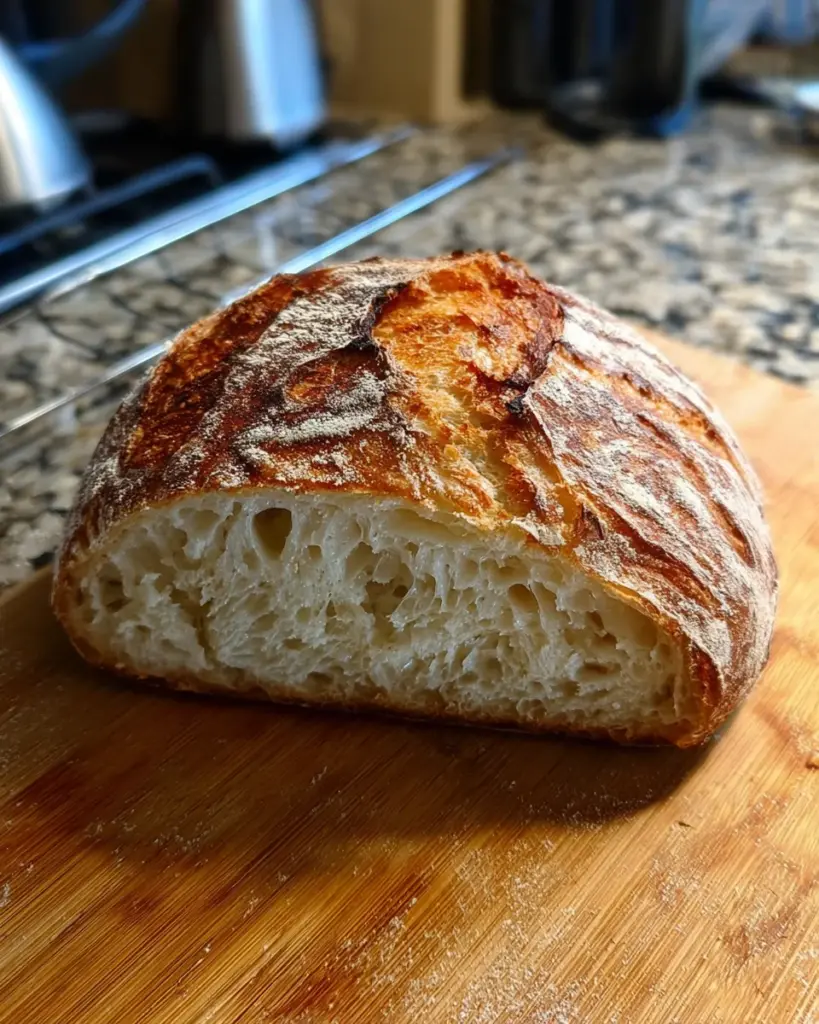
Spritzing the dough with water during the final bake helps create a crisp crust. Trust me; the results are worth it! When it’s done, let it cool before slicing to keep that wonderful texture intact.
Tips for Success
- Measure ingredients accurately for the best results.
- Keep your sourdough starter active and bubbly for a healthier rise.
- Don’t rush the cold fermentation; it truly enhances the flavor.
- Allow your bread to cool completely before slicing. This ensures the perfect texture.
- Experiment with herbs and spices for unique flavor twists!
Equipment Needed
- Mixing Bowl: A large bowl works well; alternatively, any sturdy container will do.
- Dutch Oven: Essential for baking the bread; if unavailable, a heavy pot with a lid works as a substitute.
- Banneton (Proofing Basket): Nice for support; use a bowl lined with a kitchen towel if you don’t have one.
- Bench Scraper: Helpful for handling dough; a spatula can be used instead.
Variations of Lazy Baker’s No-Bulk-Fermentation Sourdough Bread
- Herb Infused: Add dried herbs like rosemary or thyme to the dough for an aromatic touch that elevates your homemade bread.
- Cheesy Delight: Incorporate grated cheese, such as cheddar or parmesan, into the dough for a savory twist that’s perfect for sandwiches.
- Nutty Addition: Toss in chopped walnuts or sunflower seeds for added texture and a delightful crunch.
- Sweet Tooth Version: Mix in dried fruits like cranberries or raisins along with a touch of cinnamon for a sweet breakfast bread.
- Whole Wheat Alternative: Substitute part of the bread flour with whole wheat flour for a healthier option that adds more fiber.
Serving Suggestions for Lazy Baker’s No-Bulk-Fermentation Sourdough Bread
- Pair warm slices with creamy butter or herb-infused olive oil for a simple yet delicious treat.
- Serve alongside homemade soups, like hearty tomato basil or rich butternut squash.
- Elevate your sandwich game with fresh veggies and deli meats for a quick lunch option.
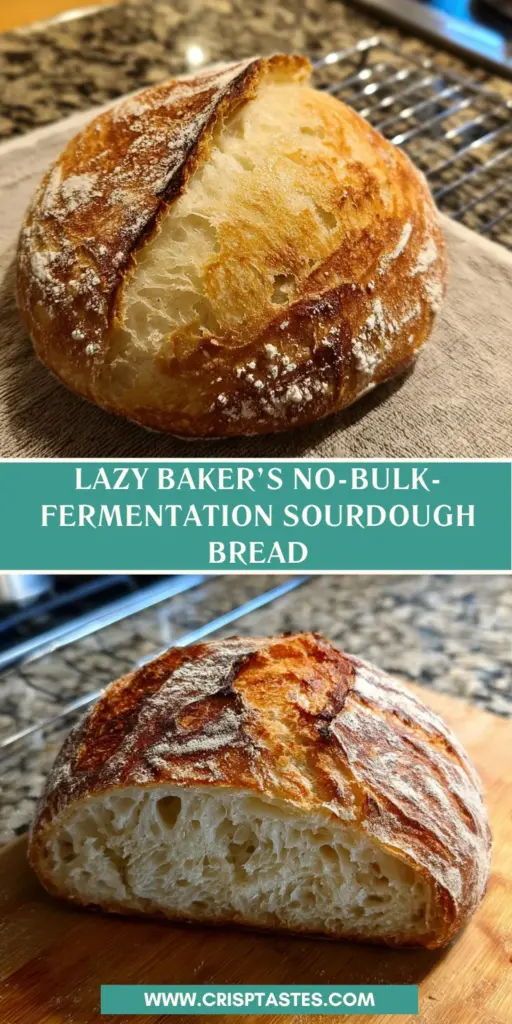
- Present the loaf on a wooden board, garnished with sprigs of fresh herbs for an inviting display.
FAQs about Lazy Baker’s No-Bulk-Fermentation Sourdough Bread
Can I use all-purpose flour instead of bread flour?
Absolutely! While King Arthur Bread Flour yields the best results, all-purpose flour can work in a pinch. Just know that the texture might be a bit softer.
What if my sourdough starter is not bubbly?
No worries! Make sure to feed your starter at least 4 to 6 hours before using it. It should be active and bubbly for the best rise in your bread.
Can I bake this bread without a Dutch oven?
Yes, though a Dutch oven is ideal for that beautiful crust. If you don’t have one, any heavy pot with a lid can be a reasonable alternative.
How do I store my sourdough bread for freshness?
The best way to store your sourdough is wrapped in a kitchen towel at room temperature for about 2 to 3 days. For longer freshness, consider freezing slices and toasting them as needed!
Can I add ingredients like nuts or cheese into the dough?
Definitely! Feel free to add your favorite mix-ins after the stretch and fold process. Just be cautious not to overload the dough, as too many ingredients can affect the rise.
Final Thoughts
Baking the Lazy Baker’s No-Bulk-Fermentation Sourdough Bread has brought so much joy into my kitchen. The process feels almost meditative, allowing me to unwind while creating something delicious. The anticipation of that first slice, warm and crusty, instantly lifts my spirits. This bread isn’t just food; it’s a labor of love, perfect for sharing with family and friends. Plus, you’ll impress everyone with your culinary skills without spending all day in the kitchen! I hope this recipe inspires you to embark on your own baking adventure. Happy baking!
Print
Lazy Baker’s No-Bulk-Fermentation Sourdough Bread
- Total Time: 2 days
- Yield: 1 loaf 1x
- Diet: Vegetarian
Description
A simple recipe for making sourdough bread without bulk fermentation, utilizing a cold fermentation process for enhanced flavor and texture.
Ingredients
- 500g King Arthur Bread Flour
- 100g active sourdough starter (fed and bubbly)
- 350g water, room temperature
- 15g salt
Instructions
- Mix the flour, water, and sourdough starter in a large bowl and let it rest for 1 hour.
- Add salt and perform stretch and folds every 30 minutes for 2 hours.
- Transfer to a lightly oiled container and refrigerate for 36 to 48 hours.
- Shape the dough into a loaf and rest for 30 minutes.
- Final shape and proof the dough in a banneton or fridge for 10 to 24 hours.
- Preheat the oven with a Dutch oven to 450°F (232°C) for 45 minutes.
- Bake the dough covered for 25 minutes, then uncover, spritz with water, reduce temperature to 400°F (204°C), and bake for an additional 35 minutes.
Notes
- Using King Arthur Bread Flour improves the bread’s texture.
- Allowing for a cold fermentation develops flavor.
- A Dutch oven is essential for achieving a good crust.
- Prep Time: 60 minutes
- Cook Time: 1 hour
- Category: Bread
- Method: Baking
- Cuisine: American
Nutrition
- Serving Size: 1 slice
- Calories: 150
- Sugar: 0.2g
- Sodium: 300mg
- Fat: 0.5g
- Saturated Fat: 0g
- Unsaturated Fat: 0g
- Trans Fat: 0g
- Carbohydrates: 30g
- Fiber: 1g
- Protein: 5g
- Cholesterol: 0mg